Covid-19 has provided an unprecedented challenge to everyone everywhere. Governments, East and West, businesses, big and small, and people, in their work, family and friendships, have been forced into unfamiliar territory. Most of us went home in late March and are only just starting to emerge from what Boris Johnson aptly described as a “hibernation”. A strange period of dead time, where clocks marched onward and the news raced while we watched, locked down and locked in. In politics, however, there is no such thing as dead time. Years’ worth of change has been condensed into 100 days. So, what happened? What did the public think of it? How did the government perform? And what does all of it mean for the future?
The UK has not dealt with this crisis well. We have the highest death toll in Europe, and the second highest death toll per capita in the world. While less developed countries are unfortunately likely to rise up the charts no one wants to top, the fact remains, the UK has not coped well, and the public understand this. Although global comparisons should be approached with caution, the public see New Zealand, who, while in a very different situation; small, sparse and insular, has fought back against Johnson’s “invisible mugger”. Keir Starmer’s critique of the government is the most penetrating lens to analyse the response to the virus in the first few months. We were slow, every step of the way. We were slow to get stranded Brits home. At-risk Britons were trapped on floating death ships such as the Diamond Princess, which was broadcast by passengers Sally and David Abel, who both contracted the virus. However, these events have been largely forgotten in the public memory, obscured by the domestic carnage that followed. We were also slow into lockdown. The fact that thousands of Atletico Madrid fans were allowed to travel from their city which already had an outbreak of Covid-19, to Liverpool for their Champions League fixture in late March, now seems farcical. As do the crowds at that gathered at Cheltenham at the same time. Neil Ferguson even claims that locking down just one week earlier could have saved 20,000 lives. Instead, the government was still talking about herd immunity, a shockingly Darwinist knee-jerk fatalism which would have condemned 500,000 to death, given we already knew the death rate was about one percent. We were slow to close our borders, throwing away our island advantage, which although diminished by globalisation, was not irrelevant. The fact we only introduced quarantine for people coming from overseas in June was laughable, like throwing sand bags round a flooded house. We were slow to protect care homes. It has emerged, that potentially Covid-positive patients were discharged to care homes. This crisis has been a journey into the unknown for the government. However, the lack of compassion in their initial response tells you something of their default mentality. Is this the same old nasty party? As of yet, Starmer has admirably risen above this jibe, but it is an easy one that the Conservatives should do better to avoid.
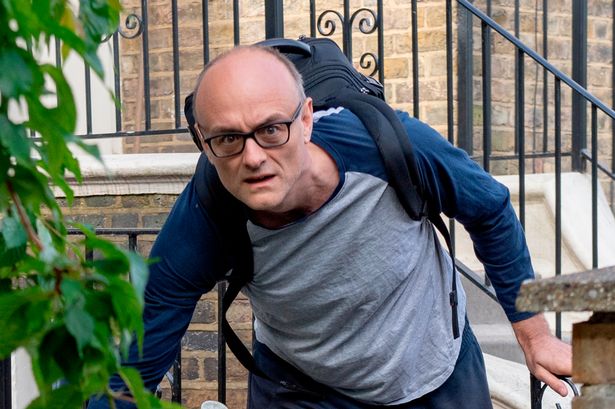
Then there were the set piece events of the crisis. Johnson nearly died, and Dominic Cummings went on a road trip. The potential death of a Prime Minister in office is always going to be a traumatic event for a nation, but during a pandemic, especially when we understood that Johnson, in his mid-fifties, was not high-risk, was anxiety inducing. Thankfully, he recovered, but it posed several questions. Firstly, where is the talent in the cabinet? Dominic Raab stepped up during this period, but when the big-man was laid low, we struggled to see where the leadership was. It did, however, win the Prime Minister an odd sort of respect. He was fighting the pandemic with us, and this would presumably alert him to the severity of the situation. However, it also begs the question, has he properly recovered? It takes only an amateur eye to see that he does not look in the best of health. Then, onto Cummings. People don’t like him. If asked why, most would struggle to give a respectable reason, but the fact remains. They were therefore predictably outraged by his blatant flouncing of the lockdown rules. While the initial trip to Durham was debatable given the exceptionalism of his circumstances, the 30 mile trip to a beauty spot to test his eyesight was ludicrous. Incredibly, the aide was made to answer questions by the nation’s journalists live on television. He performed reasonably well given how tenuous his argument was. However, this event, and more broadly Johnson’s failure to sack Cummings was a key decision in this government. Broadly, it marks the increasing power of unelected aides and special advisors, despite their unpopularity with the public. Specifically, for this government, it showed how dependent Johnson is on one unelected individual as it represented a conscious decision to forgo significant political capital on him. It also showed one of the oddities of Cummings’ ideology, his hate of centralised power, versus his personal centralisation of it. We can also bring a new term into the already bloated pandemic lexicon – the Cummings effect – meaning the drop in the public’s adherence to the lockdown and social distancing rules following the Durham debacle.
Moving onto the future of the pandemic. A vaccine is clearly the way out of this crisis, something which is out of politicians control. However, politicians love of quantifiable targets and deadlines has slightly hampered the communication of this aspect of the crisis. While there are sporadic stories providing hope, much like there is across scientific news (e.g. this drug in early development could be the cure for cancer… never to be heard of again), politicians should have emphasised the unknowability of a timescale rather than providing arbitrary dates which change every few weeks. Something which politicians have slightly more control over, is antibody testing. It first came out months ago but is yet to significantly alter the fight against the virus. Whether it was false hope, or ill-management, it is disappointing to the public. Lastly, Matt Hancock has had a bad pandemic. He is almost universally disliked by the public, and the self-inflicted fiasco over testing was embarrassing. He presumably will be removed from his post in the predicted Cabinet reshuffle in September.
What role has the government’s communication played in this crisis? It is vital to point out, that when news is as ‘hard’ as in a pandemic, the role of communication takes a backseat. However, there are important points of discussion. The first message was confused. The deadly virus was in China, then in Italy and then France, but what were we doing about it? While it was a period of trepidation and toilet paper shortages, in hindsight it looks like naively squandered time. Then, things got serious. In late March we were spoken to by Johnson, and the lockdown began. He performed well, the “Stay At Home, Protect the NHS, Save Lives” message was clear, and we were finally told, yes, this is serious. Then came the new religion. The NHS was sacrosanct, and the lives of dying pensioners was invaluable compared to the economic and emotional misery of millions. Thursday’s clapping for the NHS was community building in a time of unease, but it helped reinforce the dogma. So did the media. While the government’s daily briefings gave reasonably clear statistics about what was known, (excluding, perhaps, figures on care homes and testing), the media, particularly the BBC, flagrantly used misleading statistics to make the virus seem more deadly than it was. They headlined stories about young people dying of the virus, which, although justifiable in the sense that it was newsworthy, was probably irresponsible. Moreover, they showed their colours every day on the 10 o’clock news, in the daily in memoriam graphic which featured those who had sadly died from the virus. It was grossly unrepresentative – nearly half those shown were under 50, when we knew that around three quarters of those dying were over 70. This was not just about remembering the dead, but also about cultivating an ‘it could have been you’ mentality. The government went along with this and did not combat media bias as a visibly ill Johnson clapped from his doorstep. Clearly, the lockdown was necessary and efforts to rally the nation were admirable, however, people needed the truth. Instead, we were all told we were at risk and this informed our reaction.
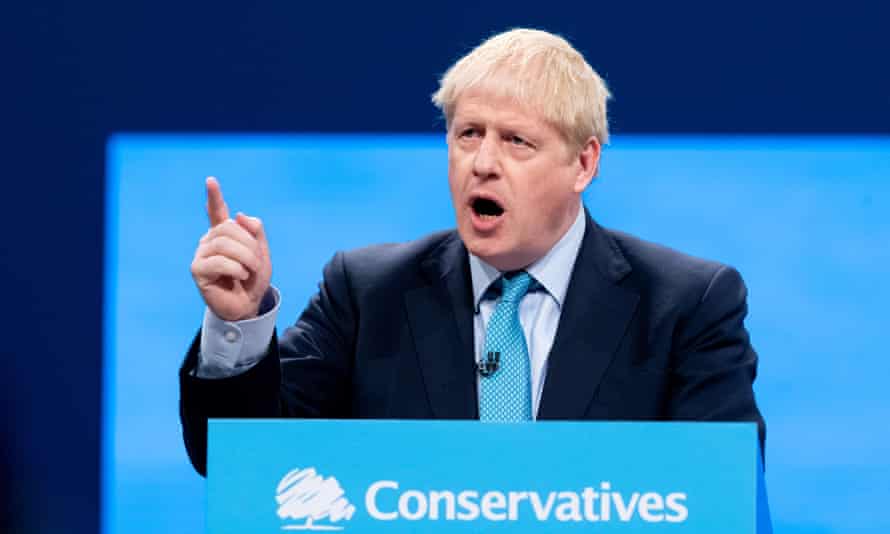
This oversight hampered the second stage, the partial lifting of the lockdown. Once again Johnson appeared on our screens to deliver the verdict – what next? For eight minutes he spoke. He performed well, was engaging, but apparently unclear. The reaction to his announcement on Gogglebox confirms this. However, while at times he eloquently meandered where he should have been clear and to the point, the message was relatively unambiguous, just more nuanced. But people did not like it. The problem lay, however, not in the second message, but in how the first message, which was broadly popular, was carried out. Obviously, telling someone to stay at home, is an easier message than, telling them to stay at home if possible, but there are some exceptions. However, the vigour which the first message was carried with meant that the public were hesitant to move on. The Labour Party and several unions acted irresponsibly here. They muddied the waters over what the message was for political gain. Several Labour MPs and union leaders spoke on the Sunday evening the announcement was made over the confusion over whether workers should be going back to work on Monday, even though the announcement clearly said the changes were only to be enacted from the Wednesday. On Monday we saw pictures of crowded undergrounds – they shoulder some of the blame for this. Since then, however, the government’s communication has been fairly straightforward. They have given people longer to understand the sort of timeline to expect, which has calmed some of the hysteria we saw in the reaction to the first partial lifting of lockdown. Lastly, a quick note on the Daily Briefings. While it is doubtful how many people not involved in politics or media watched them towards the end, at the beginning of the crisis they provided a clear platform for scrutiny and for people to understand what was going on. It was a novel idea, done well.
In the immediate future, there are several pressing concerns. Schools are high on the agenda, as is the faltering economy. Most of the public is aware that, here, there are no easy decisions. Politicians’ job of weighing up trade-offs and opportunity costs is as clear as it is difficult. Public opinion has shifted dramatically towards a cautious reopening of both schools and the economy. People recognise how missed time in school has a significant impact on education, particularly for disadvantaged pupils. A recent report stated that one in five pupils were doing under one hour of work a day. Similarly, the first job losses brought home that the furlough scheme could not save every job as the economy fell over 20% in one quarter. While the second wave of Covid-19 in America is unsurprising given that their lockdown never got the virus under control, the second waves in countries who had much more successful lockdowns such as Germany and Israel are more alarming. The take away is that we are likely to be living with the virus for a long time. Children cannot afford to miss a whole year of school, and we literally cannot afford to not reopen the economy. A pulse system seems necessary.
Covid-19 has transformed the political landscape. Brexit has slipped further still down people’s list of priorities. If Brexit-weariness won the Conservatives the 2019 election, now even mentioning it is taboo. Both parties already recognise this. Starmer, by all accounts, has had a good pandemic. He has largely restored trust in Labour as a credible opposition, and his titles alone block many of the charges levelled at Jeremy Corbyn. It remains to be seen, however, if Starmer has a vision. What does Starmer’s Britain look like? It is early days, however, at present it is doubtful whether Starmer has the imagination to get Labour out of the ideological rut they have been mired in since the 1970s. Likewise, the Conservative’s vision needs to be brought forward. A plan for a better Britain lurked at the periphery of their 2019 election campaign, but we need it now. People need hope beyond Covid-19. Dreaming up this vision will likely expose dormant fault lines between the internationalism of Rishi Sunak and the populist nationalism of Johnson. China will likely be the focus point of these debates.
How has this virus changed our culture? Working cultures are likely to change as working from home has become a viable alternative. More broadly, I am hopeful for a more compassionate culture. The reaction to the black lives matter movement has generally shown that people are more willing to be kind, even if it is a different issue. My hope is that this kindness can be afforded to all. A particular concern of mine is the economically disadvantaged. This virus will only push them further behind. We heard them in the 2016 referendum, we cannot forget them now. Difficult times bring people together and make them stronger. Maybe we will be better people to face the challenges of tomorrow.



 Ben's Blog